
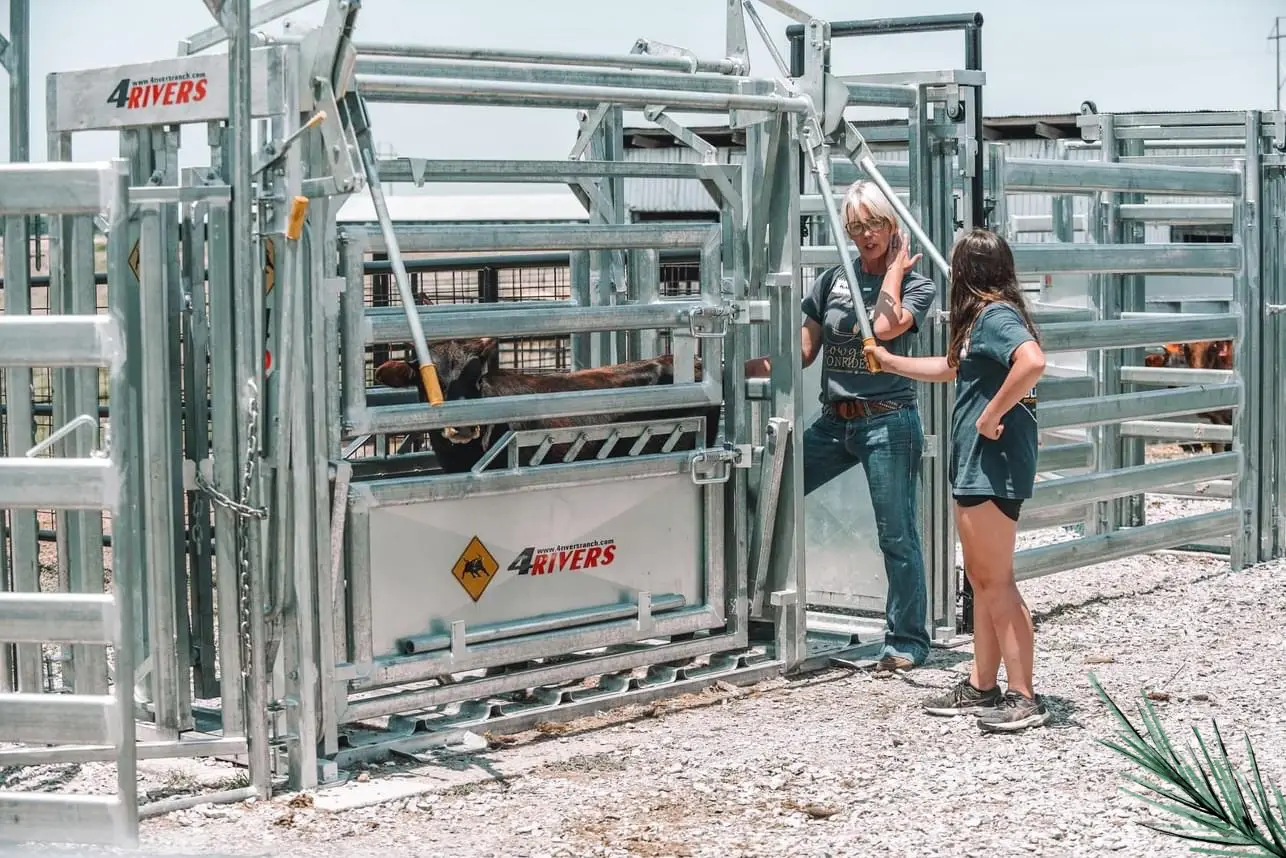
Most cattle work comes down to a few minutes of close contact. Tagging an ear, giving a shot, checking a hoof, or treating pinkeye all need an animal standing still long enough to do the job right.
That’s what cattle chutes are built for. A good chute holds the animal securely, keeps handlers out of harm’s way, and lets you finish the work without a fight. This guide covers what a chute is, why your herd needs one, and how to match a squeeze chute to the way you work.
Key Takeaways
- A cattle chute restrains one animal at a time for safe treatment, tagging, and processing.
- The head gate and squeeze sides work together to hold cattle steady with less movement and less stress.
- Parallel body squeezes and rump squeezes hold cattle differently, and each suits different operations.
- Galvanized steel and rear controls make a chute easier to live with, especially for ranchers working without a crew.
- Smooth cattle flow through the tub, sweep, and alley matters as much as the chute itself.
What Is a Cattle Chute?
A cattle chute is a piece of steel handling equipment that holds one animal in place. Cattle walk in single file, the head gate closes around the neck, and the sides squeeze in to limit movement.
Ranchers use the word “chute” for a couple of things. Some mean the narrow alley where cattle form a single-file line. Others mean the squeeze chute at the end of that alley, where the actual work happens. This guide focuses mostly on the squeeze chute, since that’s the piece doing the restraining.
Common jobs done in a chute include:
- Vaccinations and other treatment
- Ear tagging and identification
- Processing calves, including castration and dehorning
- Pregnancy checks ahead of calving season
- AI work
- Hoof and eye care
- Weighing, when paired with a scale-ready floor
Why Chutes for Cattle Matter on Every Ranch
A 1,200-pound cow doesn’t need to be aggressive to hurt someone. One sideways step, a swing of the head, or a kick at the wrong moment is enough. Working livestock in an open pen leaves too much to chance.
Safer for Handlers
A chute puts strong steel between you and the animal. The head is secured, the body is held, and side gates give easier access to the shoulder, flank, or middle of the animal without standing in the kick zone. That kind of control helps prevent injury on both sides of the panel.
Lower Stress for Cattle
Low stress cattle handling starts with proper restraint. Cattle held firmly and calmly tend to settle faster than animals that are chased, roped, or pushed too hard; low-stress chute designs help prevent panic and reduce animal stress during handling. Animal behavior specialist Dr. Temple Grandin has long taught that steady, even pressure helps cattle stay calmer, and that good footing keeps them from slipping and panicking. Her livestock handling resources cover these principles in detail.
Better Work in Less Time
A shot placed in the right spot, a tag set cleanly, an accurate preg check. A restrained animal makes each one easier to get right the first time. Fewer do-overs mean better productivity on working days and less time with each animal in the chute.
Less Dependence on a Crew
Many ranchers don’t have extra hands available when they’re needed. A well-designed chute lets one person catch, hold, treat, and release an animal. That changes how often cattle work gets done, and how much you dread doing it.
How Squeeze Chutes Work
Every chute is built around a few core parts. Knowing what each one does makes it simple to compare models before you buy.
The Head Gate
The head gate catches the animal at the neck and holds it in position. A walk-through head gate opens wide enough for cattle to exit straight out the front when you’re done. That keeps the line moving and saves you from backing animals out.
The Squeeze Sides
The sides of the chute close in to hold the animal steady and prevent cattle from trying to turn around. Two common designs handle this differently:
- Parallel body squeeze: both sides move in evenly along the length of the chute, giving consistent pressure across a wide range of cattle sizes.
- Rump squeeze: the rear of the chute narrows to control the hindquarters, with a simpler setup that many smaller operations prefer.
Side and Rear Access
Split side gates let you open only the section you need. A palpation cage at the rear, with vet doors, gives safer access for pregnancy checks and AI work. Depending on the model, slam gates and rear controls close the chute behind the animal and keep key functions within reach of a single operator.
Manual Operation
A manual chute is operated by hand through levers and gates, with no hydraulics or power source required. The controls are easy to learn, simple to maintain, and a practical fit for many small and mid-sized herds.
What to Look For in Cattle Squeeze Chutes
A few questions narrow the field quickly: how big are your cattle, what work do you do most, and how often are you working alone?
- Galvanized steel construction. Galvanizing protects steel against rust without depending on paint that chips and wears. That matters for equipment that sits outside through rain, mud, and manure. The American Galvanizers Association explains how zinc coatings protect steel over time.
- Head gate width. Wider walk-through head gates suit larger frames, bulls, and horned cattle.
- Controls within reach. Rear controls let one operator run the head gate and squeeze without circling the chute between animals.
- Size of your cattle. Large bulls and horned breeds need more height, width, and length to move through comfortably.
- Room to grow. Add-on options let you buy what you need now and upgrade later, which keeps upfront cost in line with your operation.
- Portability. A wheel kit turns a stationary chute into one you can tow to different pastures or properties.
Comparing Our Livestock Squeeze Chutes
4 Rivers Ranch builds four chute models. Each one fits a different kind of operation, and all of them are made from galvanized steel.
River King
Our top-of-the-line manual chute and the tallest, widest, and longest manual chute on the market. It’s built for large bulls and horned cattle that need extra room.
- Parallel body squeeze
- Front and rear head gate operation
- 29.5-inch full walk-through head gate
- Palpation cage with vet doors and kick door
- Split side gates and slam gates
4 Diamond
Our most popular model and a strong fit across ranch sizes. It’s laid out so one person can run it comfortably from start to finish.
- Parallel body squeeze
- 27.5-inch walk-through head gate
- Palpation cage
- Designed for solo cattle handling
4 Star
A popular choice for small and medium operations that want straightforward operation.
- Rump squeeze
- Palpation cage
- Simple, easy-to-learn controls
- Flexible add-on options
4 Horn
A practical, economical chute for hobby ranchers and smaller herds. It covers the essentials with a straightforward feature set and can be upgraded with add-ons as your operation grows.
Add-Ons That Fit the Way You Work
Add-ons let you set up squeeze chutes for cattle around the work you actually do, without paying for features your operation doesn’t need. Available options include:
- Rump Bar
- Chin Bar
- Hydralock Head Holder
- Barn Door
- Chute Floor (Scale Ready)
- Brisket Bar, available with the floor
- Crash Gate
- Wheel Kit
The Wheel Kit deserves a special mention. It makes a chute mobile, so you can bring it to the cattle instead of hauling every animal to one working area. Ask our team which add-ons pair best with each model.
Smooth Cattle Flow Starts Before the Chute
Cattle that balk in the alley rarely arrive at the head gate calm. The tub, sweep, and alley ahead of the chute set the tone for the whole job.
Well-designed cattle tubs work with cattle behavior to keep animals moving. Sheeted sweeps reduce outside visual distractions, which helps cattle focus on the path ahead instead of what’s happening beyond the panels.
When the whole handling system is laid out around cattle behavior, you spend less time pushing and more time working. Our corral designs pair chutes with tubs, sweeps, and panels in layouts sized to your herd, and our team can support you in planning the setup.
Put a Chute to Work That Fits Your Ranch
A good chute turns cattle work from a crew job into something you can handle on your own schedule. Start with the size of your cattle, the work you do most often, and how much help you usually have. Then match those answers to the model that covers them.
Our team is glad to talk through your herd, your setup, and the products that make the most sense for it. Request a quote, download the catalogue to compare models side by side, or find a dealer near you.
Frequently Asked Questions
What is the difference between a cattle chute and a squeeze chute?
“Cattle chute” is a broad term that can mean the single-file alley or the restraint at the end of it. A squeeze chute is the restraint itself, with a head gate and sides that close in to hold one animal steady for treatment.
Can one person operate a squeeze chute?
Yes. Our chutes are designed so one rancher can catch, hold, and release cattle safely. Rear controls keep key functions within reach, so you aren’t walking around the chute between every animal.
Which chute works best for bulls or horned cattle?
The River King is built for large bulls and horned cattle. It has a 29.5-inch full walk-through head gate, a parallel body squeeze, and extra height, width, and length. Request a quote to see if it fits your herd.
Should I choose a parallel squeeze or a rump squeeze?
A parallel squeeze applies even pressure along the body and handles a wider range of cattle sizes. A rump squeeze is simpler and works well for many small and medium herds. Our team can help you compare the two.
Can I move my chute between pastures?
Yes. A wheel kit makes a chute mobile so you can work cattle where they are instead of hauling them to one spot. Ask about adding a wheel kit to any of our chute models.
Why does galvanized steel matter for cattle chutes?
Galvanized steel resists rust without relying on paint, which matters for equipment that sits outside through rain, mud, and manure. That means less maintenance on a piece of equipment you’ll use season after season.
