
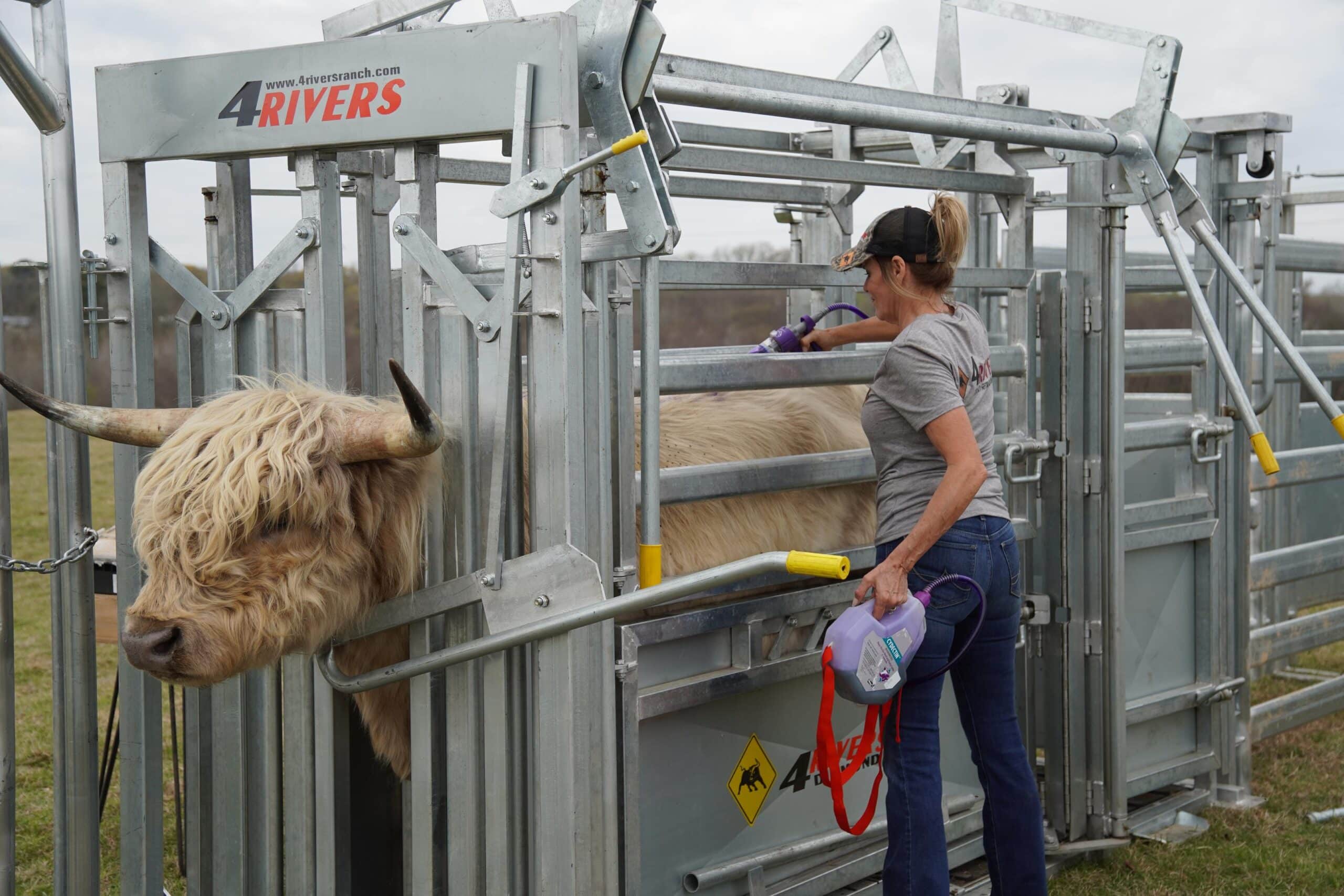
Most trouble at the chute starts about thirty feet before it. A cow balks at a shadow in the alley, the one behind her starts backing up, and now you’re climbing the fence to get things moving again.
Well-designed cattle working chutes solve that problem before it starts. The chute itself matters, but so does everything leading up to it: the crowding area, the alley, the gates, and where you stand while you work.
Here’s how to lay out a system that keeps cattle moving forward and lets one person stay in control.
Key Takeaways
- Plan the system around cattle flow first, then fit the chute to the end of it.
- A narrow, solid-sided alley fed by a tub or sweep keeps cattle single file and moving ahead.
- Smooth edges, secure latches, and quiet operation lower stress and help prevent injury.
- Rear controls and walk-through head gates make solo cattle work far more manageable.
- The best chute matches the size of your cattle and how often you work them.
The Key Parts of a Working Chute System
Most cattle handling systems are built from the same basic parts. Each one has a job, and each one affects how well the next one works.
- Crowding pen or tub: gathers a small group and turns them toward the alley.
- Alley: lines cattle up single file and holds the next few head.
- Squeeze chute: restrains the body so the animal can’t turn around or lie down while you work.
- Head gate: catches and holds the head at the front of the chute.
- Exit: gives released cattle a clear, open path out.
Put together well, the system handles vaccinations, tagging, pregnancy checks, AI work, and treatment with less time and effort per head. A scale-ready chute floor lets you add weighing at the same station.
Start With How Cattle Move
Cattle want to return to where they came from. They follow the animal ahead of them, move away from pressure, and stop at anything that looks out of place. Animal scientist Temple Grandin has written extensively on how shadows, glare, and visible people can stall a line of cattle. Low-stress handling builds on that behavior. Calm cattle move forward on their own, while frightened cattle turn back, bunch up, and push against equipment.
Design with those habits in mind:
- Point the system so cattle move toward open space and away from the direction they entered.
- Keep lighting even. Cattle often refuse to walk from bright light into a dark entrance.
- Remove loose objects, hanging chains, and anything that flaps in the wind.
- Place the handler where cattle can see you only when you need them to.
Get the flow right and the chute becomes the easy part.
Laying Out Your Cattle Chutes and Alley
The alley is the bridge between your crowding area and the chute. It should be narrow enough that cattle can’t turn around, and long enough to hold several head so the next animal is ready when you release the last one.
A few details make a big difference:
- Solid sides keep cattle focused forward instead of on you, the dog, or the neighbor’s truck.
- A gentle curve uses the animal’s natural tendency to circle back and keeps the chute out of sight until they’re close.
- Avoid sharp corners, which cause cattle to stop and bunch.
- Panels with oval, anti-bruise rails and rounded posts reduce the chance of bruising when cattle push against the sides.
Good working chutes for cattle also leave room for the person. Plan a clear path along the outside of the alley so you can follow behind without crossing into the pen.
If you already have pens in place, plan the new alley and chute to tie into them. A system that fits your existing location and the way your cattle already move will work better than one dropped in without that planning.
Use a Tub or Sweep to Load the Alley
The crowding area is where solo handling usually falls apart. Too much open space and cattle circle past you. Too little and they jam.
Our EZ Tub is a 120-degree tub with an 8 ft radius. It’s fully sheeted, so cattle can’t see distractions outside, and it moves in one direction with an automatic lock. It also has a dampening system, an anti-bruise design, and a galvanized pivot post, all built with operator safety in mind.
Sweeps are a good fit for tighter sites or smaller groups. They come in 90-degree and 180-degree options, 8 ft and 10 ft lengths, and stand 6 ft high. Each one is self-locking, so you can push cattle forward and trust the gate to hold while you step away.
Sheeted sweeps cut down on outside visual distractions and encourage cattle to keep moving toward the alley.
View Sweeps or ask us about adding an EZ Tub to your layout.
Set Up the Chute End for One Person
The chute is where you’ll spend most of your time, so put the controls where you can reach them. Rear controls let one rancher catch an animal at the head gate and squeeze it without walking back and forth along the chute.
A walk-through head gate lets released cattle exit straight ahead. A palpation cage with vet doors gives safe access behind the animal for AI work, pregnancy checks, and treatment.
Features That Lower Stress and Help Prevent Injury
High quality cattle chutes share a few traits that are easy to spot once you know what to look for.
- Smooth edges and rounded corners. Sharp edges and exposed bolt ends can cut hide and bruise cattle that push against the frame.
- Secure latches. A latch should close the same way every time so the gate holds when an animal leans into it.
- Quiet operation. Banging steel and rattling latches startle cattle. Less noise means calmer animals and safer work for you.
- Good footing. Cattle that slip tend to panic. Some ranchers add rubber floors or mats to improve footing and cut down on hoof noise.
- Body support. A sternum bar, also called a brisket bar, sits under the chest and is generally used to keep cattle upright during processing. Our Brisket Bar is available with the chute floor.
These details add up. Calmer cattle are easier to work, and fewer injuries mean less lost time and better productivity at the chute.
Which Squeeze Chute Is Best for Your Ranch?
All four of our squeeze chutes are built from galvanized steel and designed around solo cattle handling. Finding the right cattle chute comes down to the size of your cattle, how many head you work, and which features you’ll actually use. Size it to the largest animals you handle, then add accessories as your needs change.
River King
The River King is our premium manual chute and the largest one we build. It’s taller, wider, and longer to handle big bulls and horned cattle.
- Parallel body squeeze
- Front and rear head gate operation
- 29.5-inch full walk-through head gate
- Palpation cage with vet doors and kick door
- Split side gates and slam gates
Best for: ranchers working large-framed cattle or bulls who want every feature in one chute.
4 Diamond
The 4 Diamond is our most popular model. It brings a parallel body squeeze to operations of every size and puts a strong focus on one-person use.
- Parallel body squeeze
- 27.5-inch walk-through head gate
- Palpation cage
Best for: ranchers who want a dependable, full-featured chute for regular herd work.
4 Star
The 4 Star is popular with small and medium operations. It uses a rump squeeze and keeps operation straightforward.
- Rump squeeze
- Palpation cage
- Flexible add-on options
Best for: ranchers who want simple controls and room to add features later.
4 Horn
The 4 Horn is our most economical chute. It keeps the feature set practical for hobby ranchers and smaller herds, and it can be upgraded with add-ons as your operation grows.
Best for: first-generation ranchers and small herds that need safe restraint at a more approachable price.
Chute Add-Ons
Any of these cattle working chutes can be fitted with add-ons to match how you work:
- Rump Bar
- Chin Bar
- Hydralock Head Holder
- Barn Door
- Chute Floor / Scale Ready
- Brisket Bar, available with floor
- Crash Gate
- Wheel Kit
View Chutes to compare models side by side.
Build for Weather and Movement
A working system lives outside year-round. Galvanized steel protects against rust without relying on a painted coating, so there’s less upkeep between workings and more time for the rest of the ranch.
Think about where the chute needs to be, too. Ranchers with more than one pasture or leased ground often work cattle in different places through the year. A wheel kit lets you tow the chute to the herd instead of trailering the herd to the chute.
Put Your Working System on Paper Before You Build
Sketch the pens, the alley, and the chute before you buy a single panel. Mark where cattle enter, where they exit, and where you’ll stand. Those three lines tell you most of what you need to know.
We design custom cattle yards and build cattle handling equipment for ranchers who work alone. Reach out to us with your herd size, your location, and a rough layout, and we’ll help you find the right fit before you buy.
Frequently Asked Questions
What is the most important part of a cattle working system?
Cattle flow. A chute only works as well as the alley and crowding area feeding it. Solid sides, gentle curves, even lighting, and a tub or sweep sized to your herd keep cattle moving forward with less pressure.
Can one person run cattle working chutes safely?
Yes. Our chutes are designed so a single rancher can catch, squeeze, and release cattle using rear controls and walk-through head gates. Pair the chute with a self-locking sweep and solo handling becomes far more manageable.
What’s the difference between a parallel squeeze and a rump squeeze?
A parallel squeeze closes both sides of the chute evenly along the animal’s body. A rump squeeze applies pressure toward the rear. The River King and 4 Diamond use parallel squeeze, while the 4 Star uses a rump squeeze.
Do I need a tub, or will a sweep work?
Sweeps work well for smaller sites and groups, and they come in 90-degree and 180-degree options. The EZ Tub suits ranchers who want a fully sheeted, compact crowding area. We’re happy to help you compare both for your layout.
Do I need a hydraulic squeeze chute?
Hydraulic chutes can speed up processing in large operations that work many head at once. Many small and mid-sized ranchers find a well-built manual chute with rear controls handles the job at a lower cost. Tell us your herd size and we’ll help you decide.
Which chute is best for a small herd?
The 4 Horn and 4 Star are popular with hobby ranchers and smaller operations. Both offer practical features and can be upgraded with add-ons later. Request a quote and we’ll help you match a model to your herd.
