
Choosing the right gate affects far more than how cattle move through your property. The right gate improves safety, supports smoother handling, and stands up to years of daily ranch work. Material plays a major role in that performance, especially when comparing traditional steel gates with galvanized options.
At 4 Rivers Ranch, we design equipment for ranchers who expect dependable performance every day. Our experience building cattle handling systems has shown that quality construction, thoughtful engineering, and the right materials all work together to create equipment that lasts.
Key Takeaways
- Learn the differences between steel and galvanized gates.
- Discover why galvanized finishes improve long-term durability.
- Compare maintenance, strength, and overall value.
- Understand what features matter most when choosing ranch gates.
- Find practical tips for selecting equipment built for years of reliable service.
Why Material Matters
Every gate experiences constant use. Livestock lean against them, equipment passes through them, and changing weather tests them year after year. Choosing the right material helps ensure your investment continues performing without constant repairs.
Many ranchers focus on initial cost, but long-term value often comes from durability, corrosion resistance, and construction quality. A well-built gate saves time, reduces maintenance, and provides dependable access throughout your cattle handling system.
Steel Gates
Steel cattle gates have long been a dependable choice for working ranches. Their strength makes them suitable for sorting areas, working pens, and general livestock handling.
Standard steel offers excellent structural integrity, particularly when built using heavy-duty tubing, reinforced vertical braces, and quality welds. Gates built with 14-gauge or thicker steel provide added strength for demanding applications and help resist twisting over time.
The primary drawback is exposure to the elements. Without additional protection, moisture eventually leads to corrosion, requiring periodic maintenance to preserve the finish.
Why Galvanized Gates Continue to Gain Popularity
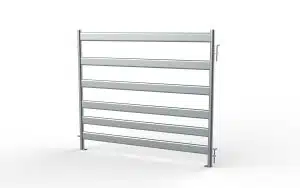
Galvanized cattle gates begin with the same strong steel foundation but receive a protective zinc coating that dramatically increases resistance to rust.
That added protection makes a noticeable difference on working ranches. Rain, mud, manure, and changing weather all contribute to corrosion over time. Galvanizing protects the steel underneath, helping maintain both appearance and structural integrity with minimal maintenance.
At 4 Rivers Ranch, every gate is built from galvanized steel because we believe ranch equipment should spend its life working instead of sitting in the shop waiting for repairs.
Construction Is Just as Important
Material is only part of the story. Construction quality determines how well a gate performs after years of daily use.
Look for features such as:
- Heavy duty galvanized construction
- Reinforced frames
- Quality welds that resist cracking
- Coped rails that create stronger joints than flattened tube ends
- Welded caps and feet for additional durability
- Adjustable hinges that support smooth operation
- Secure latches that are easy for the operator to use while remaining difficult for livestock to open
Rounded tubing and smooth edges also help reduce the risk of injury to both cattle and handlers during normal operation.
Choosing the Right Gate for Your Ranch
No two ranches operate exactly alike, so choosing the right gate starts with understanding how it will be used.
Think about:
- Herd size
- Corral layout
- Existing panels
- Width of working alleys
- Equipment access
- Future expansion plans
Pasture entrances often benefit from wider farm gates, while crowding areas require gates with greater rigidity and strength. Gates should also be sized appropriately to prevent bottlenecks and allow equipment to move efficiently through the facility. For larger machinery, openings of 14 to 16 feet are commonly recommended.
Many manufacturers offer multiple lengths in 2-foot increments, making it easier to build a layout that fits your property without compromising cattle flow.
Comparing Long-Term Value
When comparing options, purchase price is only one part of the equation.
Heavy-duty galvanized gates commonly range between approximately $190 and $370 depending on size, construction, and features. While galvanized models may cost more upfront than painted alternatives, lower maintenance requirements often make them the better long-term investment.
A quality gate should remain dependable through years of daily use, making durability far more important than choosing the lowest prices available today.
What We Build at 4 Rivers Ranch
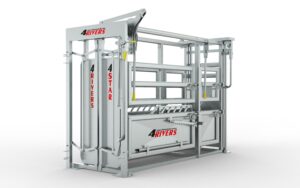
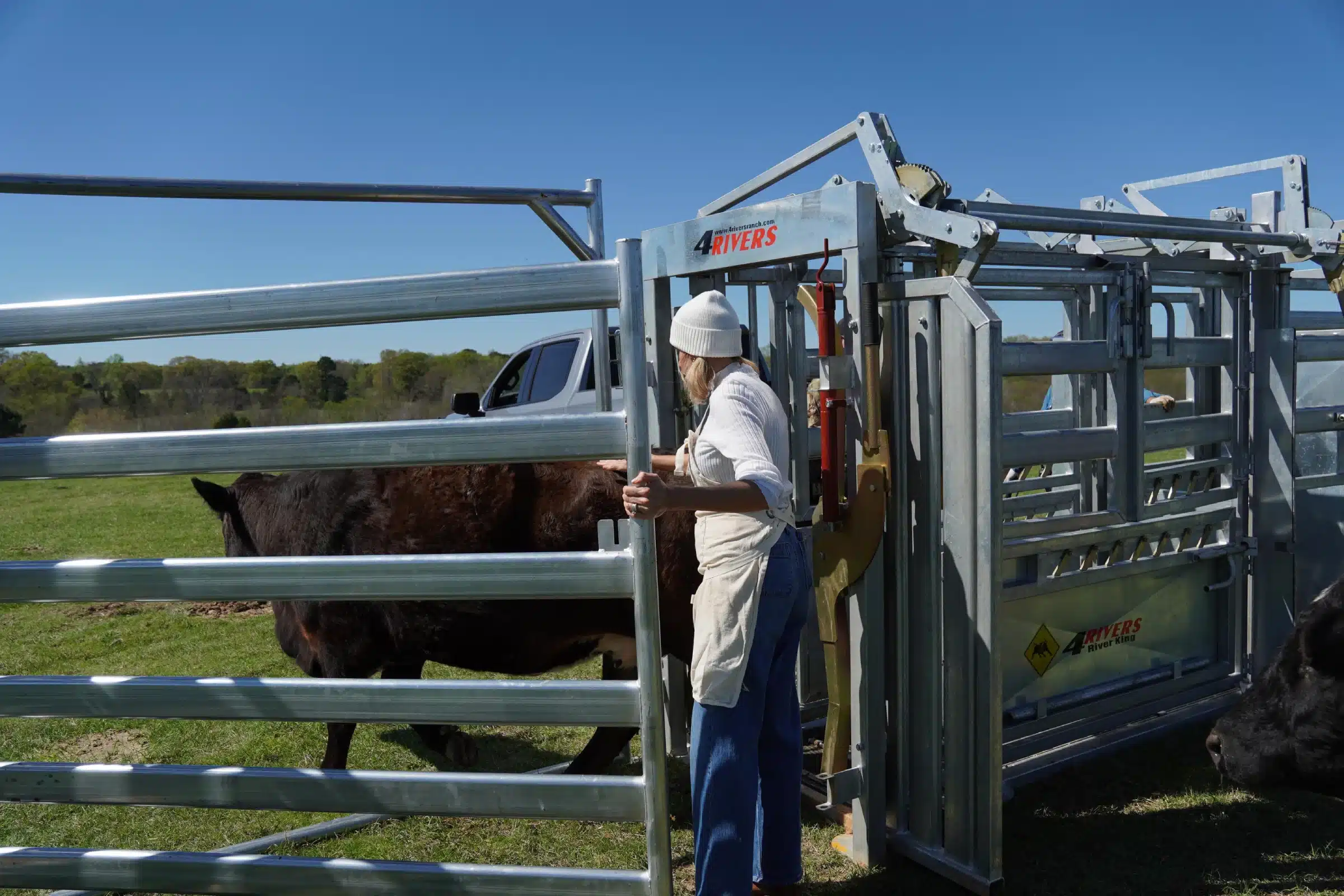
Our company builds gates to integrate seamlessly with complete cattle handling systems. Every gate is designed to work alongside our panels, corrals, sweep systems, and squeeze chutes, giving ranchers the flexibility to expand their facilities over time.
We build using galvanized steel, treated welds, welded caps and feet, and coped rails that create stronger connections throughout the frame. The result is equipment built for strength, long-term durability, and dependable ranch performance.
Invest in Equipment Built to Last
Good equipment should make every working day a little easier. Selecting quality gates built with durable materials reduces maintenance, improves livestock flow, and gives you confidence every time cattle move through your facility.
If you’re comparing options or planning a new handling system, the team at 4 Rivers Ranch is here to help. Contact us today to discuss gate sizes, available options, shipping and delivery, or request a quote. We’ll help you choose equipment that’s the perfect fit for your operation.
Frequently Asked Questions About Heavy Duty Gates
Are galvanized gates stronger than steel gates?
Galvanized gates use the same strong steel foundation as traditional steel gates. The zinc coating improves corrosion resistance, allowing the gate to maintain its strength and appearance much longer in outdoor environments.
What makes a gate heavy duty?
Heavy-duty gates typically use thicker steel, reinforced braces, quality welds, and durable hinges designed to withstand repeated livestock pressure. These features help prevent sagging, twisting, and premature wear.
What size gate should I choose?
The right size depends on where the gate will be installed and how it will be used. Entry points for tractors and larger equipment often require wider openings, while sorting pens and handling areas benefit from gates sized for better livestock control.
Are galvanized gates worth the investment?
For most ranches, yes. Galvanized gates require less maintenance, resist rust, and generally provide a longer service life, making them an excellent long-term value despite a slightly higher upfront cost.
Can I order gates that match my existing handling system?
In many cases, yes. Gates are available in multiple lengths and configurations to integrate with existing panels and handling equipment. If you have questions about compatibility, our team is happy to help you find the right solution.
