
A lot of ranch jobs don’t call for the biggest gate you can buy. Moving cattle between holding pens, accessing feeding areas, or stepping into a pasture all require different openings than your main equipment entrance. Matching the gate to the job creates a layout that’s easier to work with every day.
Smaller cattle gates are often some of the busiest pieces of equipment on a ranch. The right width keeps cattle moving naturally, gives you better control in tighter spaces, and helps your handling system function the way it was intended. Here’s what to know when comparing 4 to 12 foot gate options.
Key Takeaways
- Learn where 4 to 12 foot cattle gates fit into a cattle handling system.
- Compare common gate sizes for corrals, alleys, and pasture access.
- Discover which gate widths work best for different ranch applications.
- Learn what construction features improve durability and reduce maintenance.
- Choose equipment built for long-term ranch performance.
Why Smaller Gates Matter
While wider gates are essential for equipment access, smaller gates often see the most use throughout the day. They control cattle movement through alleys, separate groups during sorting, and provide convenient access throughout your ranch.
Choosing the correct width helps improve cattle flow while avoiding oversized openings that make livestock harder to control. Smaller gates also require less maintenance than larger gates because they place less strain on hinges and support posts over time.
Most standard cattle gates stand approximately 50 to 52 inches tall, providing an ideal height for safely handling typical beef cattle while maintaining excellent visibility across your facility.
When to Use a 4 Foot Cattle Gate
A 4 foot cattle gate is ideal for pedestrian access, narrow walkways, and utility openings where livestock movement is limited. Many ranchers also install a 4 ft cattle gate between small holding pens or sorting areas to maintain control without sacrificing accessibility.
Even compact gates should be built with the same attention to quality as larger models. Heavy-duty galvanized steel, reinforcing braces, and continuous welded joints help ensure dependable performance regardless of gate size.
Where a 5 Ft Cattle Gate Works Best
A 5 ft cattle gate offers additional clearance while maintaining excellent livestock control. It works well in smaller corrals, sorting pens, and locations where equipment access is not the primary concern.
This size is especially popular with hobby ranchers and smaller cattle operations looking for practical, durable equipment that fits naturally into compact layouts.
Why Ranchers Choose a 6 Ft Cattle Gate
A 6 ft cattle gate is one of the most versatile choices for interior working areas. It provides comfortable livestock movement while remaining easy to operate in tighter spaces.
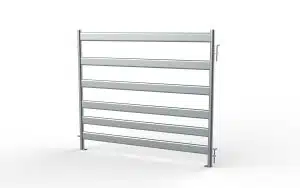
Many ranchers also install a 6 foot cattle gate between adjoining corrals or working pens where cattle are moved regularly throughout the day. Progressive rail spacing is another valuable feature on quality gates because it helps prevent calves from getting their heads caught while maintaining secure livestock containment.
The Benefits of an 8 Ft Cattle Gate
An 8 ft cattle gate creates additional flexibility without taking up unnecessary space. It allows cattle to move comfortably while accommodating smaller tractors, utility vehicles, and feeding equipment.
An 8 foot cattle gate is commonly used between working pens and secondary equipment entrances. Many ranchers also install 8 ft cattle gates in sorting systems where smooth cattle flow is important without creating oversized openings.
Why a 10 Ft Cattle Gate Is a Popular Choice
A 10 ft cattle gate offers one of the best balances between livestock control and equipment access. It provides enough clearance for most utility vehicles, compact tractors, and feeding equipment while maintaining excellent stability during everyday cattle handling.
Many ranchers choose a 10 foot cattle gate for pasture entrances, feeding areas, and rotational grazing systems where livestock are moved frequently. Multiple 10 foot cattle gates can also be incorporated throughout a larger corral layout to improve efficiency and simplify cattle movement between working areas.
When a 12 Ft Cattle Gate Makes Sense
A 12 ft cattle gate is an excellent option for larger pasture entrances, hay storage areas, and equipment crossings where additional clearance is beneficial.
Many ranchers choose 12 foot cattle gates because they provide plenty of room for trailers and feed wagons without requiring the space of wider entrance gates. Selecting the right width helps reduce bottlenecks while keeping livestock moving calmly through the facility.
What to Look for in Any Gate
No matter which size you choose, quality construction determines how well a gate performs after years of ranch use.
Look for features such as:
- Heavy-duty hot-dip galvanized steel for maximum rust protection
- Galvanized steel construction, the industry standard for durability and strength
- Minimum 16-gauge steel tubing for handling livestock pressure
- Continuous welded joints with reinforcing braces
- Continuous-welded vertical stays that help prevent bending
- Heavy-duty latch systems for improved gate security
- Two-hinge systems with adjustable hinge bolts for easier installation and long-term alignment
If a gate will be installed in high-pressure working areas, vertical rail spacing of approximately six inches also helps improve strength while maintaining safe livestock control.
Build a System That Grows With Your Ranch
One advantage of modular cattle handling equipment is flexibility. Heavy-duty gates are commonly available in sizes from 4 to 20 feet, allowing you to match each opening to its intended purpose. Common gate sizes include 4, 6, 8, and 10 feet, making it easy to create an efficient layout throughout your facility.
A small cattle gate works well for walk-through access and sorting pens, while wider openings can be reserved for equipment and primary livestock movement. Gates also vary considerably in weight, with smaller models weighing under 50 pounds and larger gates approaching 200 pounds, making proper installation and quality hardware important for long-term performance.
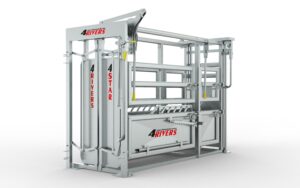
At 4 Rivers Ranch, every gate is designed to integrate with our panels, corrals, and cattle handling equipment, giving ranchers dependable solutions that can grow alongside their operation.
Choose the Right Gate for Every Part of Your Ranch
Every opening serves a different purpose, and choosing the right gate width helps your entire handling system perform better. Matching gate size to its intended use improves cattle flow, simplifies equipment access, and creates a safer working environment for everyone on the ranch.
If you’re planning a new facility or upgrading an existing one, the team at 4 Rivers Ranch is ready to help. We’ll answer your questions, recommend the right gate sizes, and help you build a cattle handling system designed to perform for years to come.
Frequently Asked Questions
Is a 10 ft cattle gate large enough for most ranches?
Yes. A 10 ft cattle gate provides an excellent balance of access and stability. It accommodates most utility vehicles, compact tractors, and everyday livestock handling, making it one of the most versatile gate sizes available.
Where should I install a 12 ft cattle gate?
A 12 ft cattle gate works well at pasture entrances, hay storage areas, and equipment crossings where trailers or larger machinery regularly pass through the opening.
What is the best use for an 8 ft cattle gate?
An 8 ft cattle gate is ideal between working pens, holding areas, and secondary equipment entrances where livestock movement and moderate equipment access are both important.
When should I choose a small cattle gate?
A small cattle gate is a practical choice for walk-through access, sorting pens, utility openings, and smaller corrals where maintaining livestock control is the priority.
Can I use different gate sizes in the same handling system?
Absolutely. Combining 4, 5, 6, 8, 10, and 12 foot gates throughout your facility creates a handling system that supports efficient cattle flow while giving each area the access it needs.
